
Basement Sealer vs. Basement Waterproofing: What Kansas City Homeowners Need to Know
Last updated April 2026
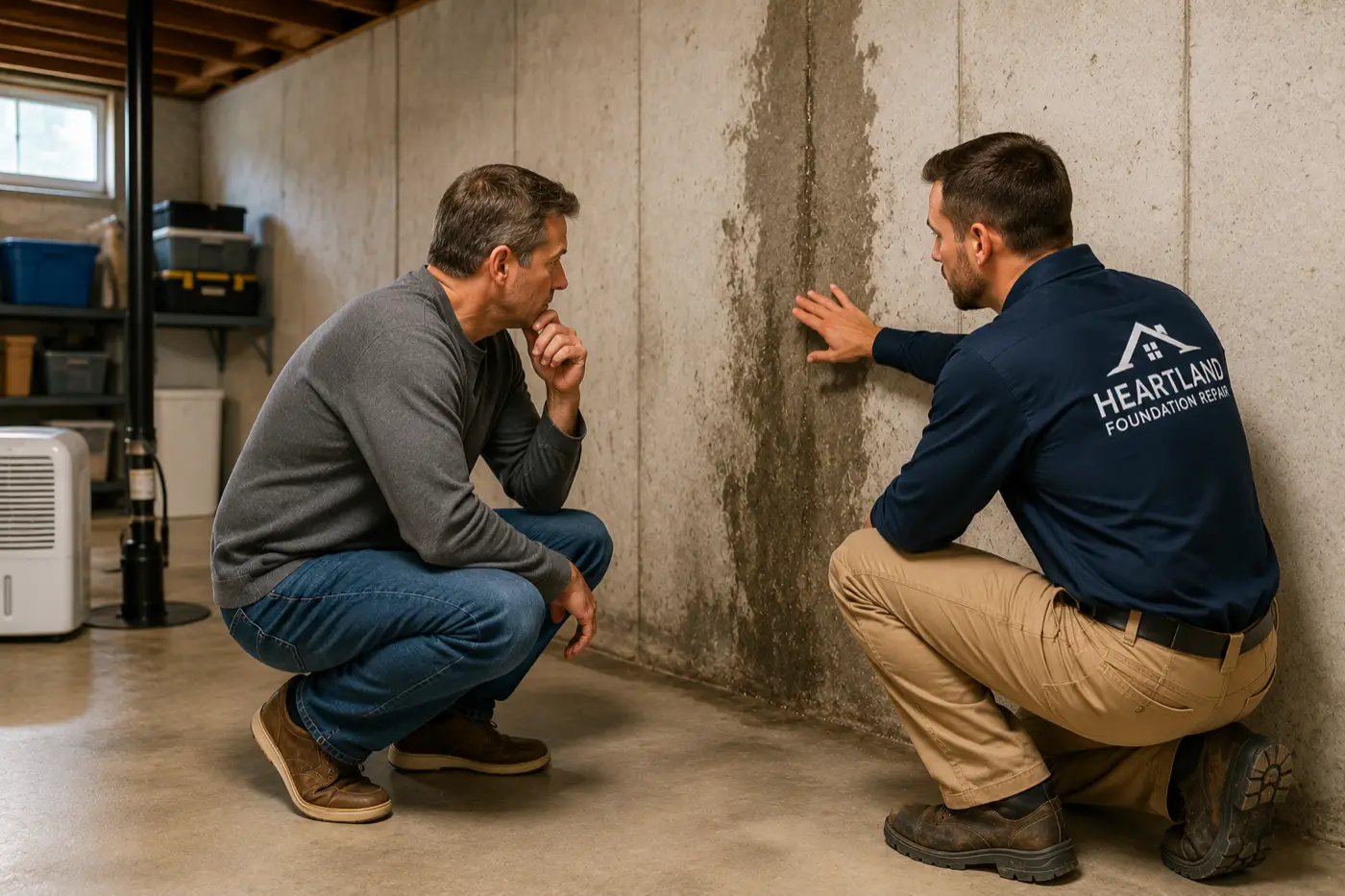
Many homeowners assume a basement sealer is a complete waterproofing solution. In reality, sealers help block moisture penetration through concrete surfaces, but they often work best as part of a larger waterproofing strategy. Understanding the difference can help homeowners avoid recurring moisture issues and costly repairs.
Why Many Basement Moisture Problems Keep Coming Back
A homeowner notices a damp basement wall.
They buy a basement sealer.
The wall looks better for a few months.
Then the moisture returns.
Sound familiar?
The problem is that many homeowners treat the symptom instead of the source.
A basement sealer can be an excellent tool, but it's important to understand what it actually does and what it doesn't do.
According to the Heartland Foundation Repair basement waterproofing team, water can enter a home through multiple pathways, requiring solutions that address both moisture intrusion and the conditions causing it.
What Is a Basement Sealer?
A basement sealer is designed to help reduce moisture penetration through concrete and masonry surfaces.
Common applications include:
- Basement walls
- Concrete block walls
- Foundation surfaces
- Utility areas
The goal is to create a protective barrier that limits moisture movement through porous materials.
For many homes, a quality basement sealer solution can become an important part of an overall moisture management strategy.
The Biggest Misunderstanding About Basement Sealers
A basement sealer is not the same thing as a waterproofing system.
A sealer helps resist moisture.
A waterproofing system helps manage:
- Groundwater
- Drainage
- Hydrostatic pressure
- Foundation moisture intrusion
According to BBB-accredited Heartland Foundation Repair, basement waterproofing often includes drainage systems, crack repairs, sump pumps, encapsulation, and other moisture-control solutions depending on the source of the problem.
Understanding this difference helps homeowners avoid relying on a single product for a larger structural issue.
How Moisture Gets Into Basements
Many people assume water enters only through visible cracks.
In reality, moisture can enter through:
- Concrete pores
- Foundation joints
- Wall cracks
- Floor cracks
- Window wells
- Poor drainage systems
Kansas City homes are especially vulnerable because local clay soils expand and contract as moisture levels change.
Seasonal soil movement and moisture fluctuations are among the leading causes of foundation and basement water problems throughout the region.
When a Basement Sealer Makes Sense
A basement sealer may be effective when homeowners notice:
- Minor wall dampness
- Surface moisture
- Efflorescence (white mineral deposits)
- Slight humidity concerns
In these situations, sealing exposed concrete can provide an additional layer of protection.
However, the sealer should be viewed as part of a larger moisture-control plan rather than a standalone fix.
Signs You May Need More Than a Sealer
Some warning signs indicate a larger waterproofing issue:
Standing Water
Water collecting on basement floors often requires drainage solutions.
Recurring Moisture
If moisture returns after sealing, the source likely remains unresolved.
Musty Odors
Persistent odors can signal ongoing moisture problems.
Wall Cracks
Foundation movement may allow water intrusion through structural openings.
Mold Growth
Excess moisture creates conditions where mold can thrive.
In these situations, professional basement waterproofing services may provide a more comprehensive solution.
Why Water Pressure Matters
One of the most overlooked causes of basement moisture is hydrostatic pressure.
This occurs when saturated soil surrounding the home pushes against basement walls.
Over time, this pressure can:
- Force water through cracks
- Push moisture through concrete
- Create wall movement
- Accelerate deterioration
A basement sealer can help protect surfaces, but it cannot eliminate hydrostatic pressure itself.
That's why many waterproofing projects involve drainage improvements and pressure-relief systems.
The Connection Between Waterproofing and Foundation Health
Moisture doesn't only affect basements.
It can also affect:
- Foundations
- Structural stability
- Crawl spaces
- Concrete surfaces
Long-term moisture exposure may contribute to foundation settlement and structural stress.
Homeowners experiencing both moisture and foundation concerns often benefit from foundation repair services that address the underlying structural conditions.
Preventing Future Moisture Problems
The best waterproofing strategy usually combines multiple layers of protection.
This may include:
- Basement sealers
- Crack repair
- Drainage improvements
- Sump pumps
- Foundation waterproofing
- Exterior grading corrections
For homes dealing with groundwater concerns, professional waterproofing solutions help create long-term protection rather than temporary fixes.
Frequently Asked Questions
Final Thoughts
A basement sealer can be a valuable part of protecting your home.
But lasting moisture control usually requires understanding why water is entering in the first place.
Whether you're dealing with minor dampness or recurring water intrusion, the right solution often involves more than simply coating a wall.
For homeowners seeking long-term moisture protection, contact us today and discover how professional waterproofing strategies can help protect your basement, foundation, and home for years to come.
John A. Coil