
Why Cheap Foundation Repairs Often Cost More Later: The Hidden Costs Every Homeowner Should Know
Last updated April 2026
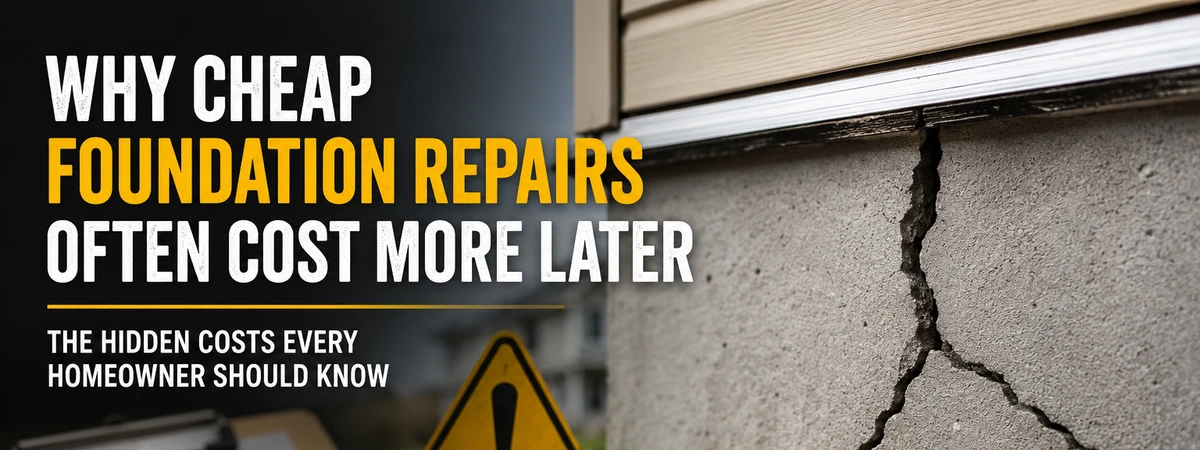
Choosing the lowest-priced foundation repair can lead to repeat repairs, worsening structural damage, and significantly higher costs over time. Learn how to identify quality repairs, avoid common contractor shortcuts, and make an investment that protects your home for years to come.
The Lowest Quote Isn't Always the Best Deal
When homeowners discover a foundation problem, one of the first questions they ask is:
"How much is this going to cost?"
It's a fair question. Foundation repair isn't something most people budget for, and naturally, it's tempting to choose the company with the lowest estimate.
But here's what experienced homeowners often learn the hard way:
The cheapest repair is rarely the least expensive solution.
In many cases, low-cost repairs only address the visible symptoms while leaving the real structural issue untouched. Months, or even years, later, the same problem returns, often larger, more complicated, and far more expensive to fix.
The goal isn't to find the cheapest repair. It's to find the repair that solves the problem the first time.
Why Foundation Repairs Vary So Much in Price
If you've received multiple estimates, you've probably noticed that prices can vary dramatically. That doesn't always mean one contractor is overcharging. It often means each company is proposing a different solution.
Some estimates include:
- Complete structural evaluation
- Soil analysis
- Long-term stabilization
- High-quality materials
- Transferable warranties
Others may simply recommend the quickest, least expensive repair that addresses today's visible damage and not tomorrow's structural risks. Understanding what's included is often more important than comparing the bottom-line price.
Cheap Repairs Often Focus on the Crack, Not the Cause
A foundation crack is a warning sign. It isn't usually the actual problem. Imagine seeing water dripping from your ceiling. You could repaint the stain, but unless you repair the roof, the leak will return. Foundation issues work the same way.
Small cracks may be caused by:
- Expanding clay soil
- Poor drainage
- Hydrostatic pressure
- Settlement
- Improper grading
- Seasonal moisture changes
Simply filling the crack without correcting the underlying issue often leads to recurring damage.
The Cost of Doing the Same Job Twice
One of the biggest hidden expenses isn't the initial repair. It's paying for another one later.
A homeowner might save a few hundred dollars today by choosing the lowest estimate, only to face:
- Larger foundation movement
- Additional wall cracking
- Uneven floors
- Door and window alignment problems
- More extensive structural repairs
What seemed like a bargain quickly becomes the more expensive option.
Cheap Materials Don't Stay Cheap
Not every repair system is created equal.
Lower-priced contractors sometimes reduce costs by using:
- Lower-grade materials
- Fewer support piers
- Minimal reinforcement
- Basic crack fillers
- Limited drainage improvements
While these solutions may look acceptable initially, they often don't perform as well over time. Quality materials are designed to handle years of soil movement, moisture changes, and seasonal expansion. The National Association of Home Builders (NAHB) notes that using quality construction practices and durable materials helps improve a home's long-term structural performance and reduces maintenance over time.
Poor Drainage Can Undo Any Repair
Many foundation problems begin outside the home. If water continues collecting around the foundation, even a properly repaired structure may experience ongoing stress.
An experienced foundation repair contractor evaluates factors such as:
- Gutter discharge
- Downspout extensions
- Yard grading
- Surface drainage
- Waterproofing needs
Ignoring these issues can shorten the life of any repair. That's why comprehensive solutions often include recommendations beyond the foundation itself. For homeowners dealing with moisture issues, basement waterproofing and proper drainage improvements often work hand in hand with structural repairs.
Inexperienced Contractors Can Miss Bigger Problems
Foundation repair isn't just construction. It's a structural diagnosis.
An experienced contractor understands how foundations behave under different soil conditions and recognizes signs that indicate deeper issues. Resources from the American Society of Civil Engineers (ASCE) emphasize the importance of proper structural evaluation and engineering principles when addressing foundation movement, helping homeowners understand why lasting repairs require more than cosmetic fixes.
Without a thorough inspection, it's easy to mistake symptoms for the actual problem. That can lead to repairs that look successful initially but fail to prevent future movement.
Warranties Matter More Than You Think
A warranty says a lot about a company's confidence in its work.
Before hiring anyone, ask:
- What does the warranty cover?
- Is it transferable?
- How long does it last?
- What situations are excluded?
A low-cost repair with little or no warranty may leave homeowners responsible for future repairs if problems return.
Delaying Proper Repairs Can Reduce Home Value
Foundation issues affect more than the structure.
They can influence:
- Property value
- Buyer confidence
- Home inspections
- Mortgage approvals
- Insurance concerns
Potential buyers often ask detailed questions about foundation work. Professional repairs performed by a reputable contractor with documentation and warranties typically inspire much greater confidence than undocumented, low-cost fixes.
Quality Repairs Protect More Than Your Foundation
A stable foundation helps protect the rest of your home.
Proper repairs reduce the risk of:
- Interior drywall cracks
- Sticking doors
- Uneven flooring
- Plumbing stress
- Window misalignment
- Exterior brick separation
Treating the source of the problem helps preserve the entire structure.
Questions to Ask Before Choosing the Lowest Bid
Before choosing any contractor, take time to compare more than just the price. The Federal Trade Commission (FTC) recommends asking detailed questions, reviewing contracts carefully, and understanding warranties before hiring a home improvement contractor. These steps can help homeowners avoid costly mistakes and unexpected expenses.
Rather than asking only, "How much does it cost?" ask questions like:
- What caused the damage?
- How does this repair solve the root problem?
- What materials are being used?
- Is drainage being addressed?
- What warranty is included?
- Can I see previous projects?
- Is this solution designed for long-term stability?
The answers often reveal far more than the price.
What Makes a Foundation Repair Company Worth the Investment?
The best contractors don't simply repair cracks. They investigate why the damage occurred and recommend a solution designed to last.
Look for a company that offers:
- Thorough inspections
- Honest recommendations
- Proven repair systems
- Clear communication
- Strong warranties
- Positive customer reviews
- Experience with local soil conditions
At Heartland Foundation Repair, every project begins with understanding the cause of the problem and not just the symptoms. Our team develops customized repair plans that help homeowners throughout the Kansas City area protect their investment for the long term.
Frequently Asked Questions
Final Thoughts
When it comes to foundation repair, the lowest estimate can sometimes become the highest expense. Saving money upfront may feel like a smart decision, but if the repair fails to solve the underlying problem, you'll likely spend far more correcting the damage later.
A quality repair isn't simply an expense but it's an investment in your home's safety, stability, and long-term value. Working with an experienced contractor who focuses on lasting solutions, quality materials, and honest recommendations gives you confidence that the job is done right the first time.
If you've noticed signs of foundation movement or have received multiple estimates, take the time to understand what you're paying for and not just how much you're paying. That decision could save you thousands of dollars and years of unnecessary stress.
John A. Coil